
22 August 2026 · TJ Smile Studio
Invisalign black triangles: why they appear and how to fix them
Discover what causes black triangles with Invisalign and learn effective ways to fix them, ensuring a confident smile after treatment.
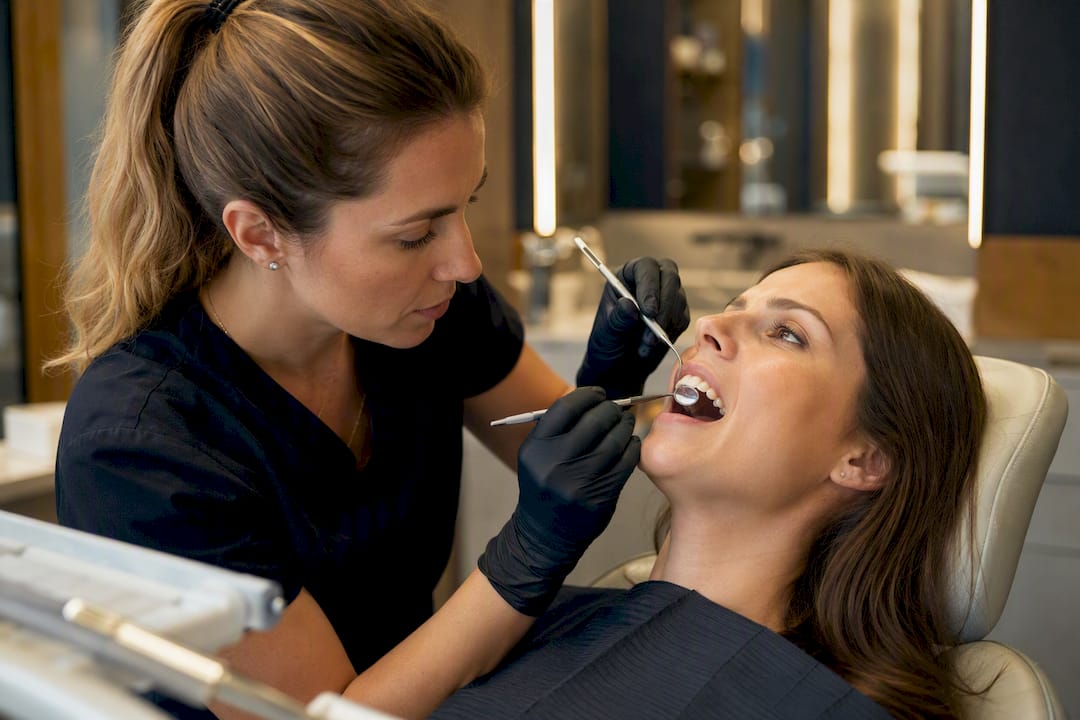
Black triangles are the small gaps that open up between your teeth at the gumline once the gum tissue, or papilla, no longer fills the space. Invisalign does not usually cause them. Aligners straighten crooked or overlapping teeth that were already hiding a gap, and once the teeth move into their correct positions, that gap becomes visible. The dental term is an open gingival embrasure. If you have spotted one during or after treatment, three routes generally help:
- Prevention during treatment: interproximal reduction (IPR) and careful contact-point planning
- Restorative fixes afterwards: composite bonding, Bioclear, or veneers
- A periodontal check: to rule out gum disease or recession as the underlying cause
Key Takeaways
Invisalign typically reveals pre-existing black triangles rather than causing them, and the right fix depends on whether the cause is orthodontic, restorative, or periodontal.
| Point | Details |
|---|---|
| Black triangles are common | Incidence after clear aligner treatment reaches 40.3% in the mandible and 25.7% in the maxilla, highest at the lower central incisors. |
| Prevention starts early | IPR and contact-point planning at the outset of aligner treatment reduce the chance of a visible gap forming. |
| Restorative fixes are usually fast | Composite bonding or Bioclear typically closes smaller gaps in a single visit; veneers suit larger cosmetic changes. |
| Rule out gum disease first | Active bleeding, recession, or mobility need a periodontal assessment before any cosmetic treatment. |
| TJ Smile Studio combines both approaches | The clinic assesses papilla risk during digital Invisalign planning and offers bonding, veneers, and refinements to close gaps afterwards. |
Table of Contents
- What causes black triangles between teeth?
- Why Invisalign often brings black triangles to light
- How common are black triangles after clear aligner treatment?
- Can you prevent black triangles while wearing Invisalign?
- What are the best treatments for black triangles after Invisalign?
- When should you see a dentist about black triangles?
- What our clinic looks for when planning around black triangles
- Getting your black triangles assessed and treated in Glasgow
- Sources
What causes black triangles between teeth?
The gap between two teeth at the gumline is called the interdental embrasure, and whether the papilla fills it depends on three things: the shape of the tooth, the position of the contact point, and how much bone sits underneath.
- Crown shape. Triangular teeth, which taper sharply towards the gum, leave a wider gap for the papilla to fill than square teeth with more parallel edges. Triangular incisors are one of the clearest predictors of an open embrasure.
- Distance from the contact point to the bone. When the gap between where the teeth touch and the top of the supporting bone (clinicians call this the interproximal contact point to alveolar bone crest, or ICP–ABC, distance) grows beyond roughly 5mm, the papilla usually cannot fill the space fully, according to a peer-reviewed review of open gingival embrasures.
- Gum recession, bone loss and age. Ageing gums and any history of periodontal disease reduce papilla height, and the effect compounds with the two factors above.
Where the contact point sits (closer to the biting edge versus closer to the gum) also matters: a contact point positioned lower, nearer the gumline, gives the papilla less room to work with and a black triangle becomes more likely.
Why Invisalign often brings black triangles to light
Aligners are particularly good at two things: derotating twisted teeth and resolving crowding. Both movements can uncover a gap that was always there but hidden by overlap.
- Derotation. A rotated tooth often disguises an uneven gumline; once it turns to its correct angle, the true embrasure shape shows.
- Intrusion. Moving a tooth slightly deeper into the socket can shift the gum architecture and change how much papilla is visible.
- Contact-point height changes. As crowding resolves, the point where two teeth touch can move, altering the shape of the space beneath it.
Clinical explainers on aligner treatment note that Invisalign’s core strength is alignment, not gum reshaping, so any papilla risk needs deliberate planning rather than being left to the software’s default movements, a point echoed in independent orthodontic commentary on aligner-related black triangles. Digital treatment plans model tooth movement convincingly, but they do not automatically account for gum response.
Pro Tip: Ask to see your ClinCheck or digital plan zoomed in at the gumline, not just the smile view. It is the easiest way to spot a developing embrasure before treatment finishes.
How common are black triangles after clear aligner treatment?
Open gingival embrasures are genuinely common after aligner therapy, not a rare complication. A 2025 retrospective study found incidence rates of 25.7% in the maxilla and 40.3% in the mandible, with the highest risk concentrated at the mandibular central incisors.
The same study identified several statistically significant predictors:
- Greater distance between the contact point and the alveolar bone crest
- Older patient age
- Triangular crown shape
- Mandibular crowding before treatment
Beyond appearance, these gaps have practical consequences. Food debris collects in the space, plaque builds up faster, and the area becomes harder to clean thoroughly with a normal brushing routine.
Can you prevent black triangles while wearing Invisalign?
Prevention is largely about planning, not luck. The single most effective step is identifying triangular tooth shapes and papilla risk at the very start of treatment, then designing the aligner sequence around it.
- Interproximal reduction (IPR). This is the careful removal of a small amount of enamel between teeth, usually well under a millimetre per surface. Done at the right stage, it shifts the contact point and reduces the space the papilla needs to fill. It is quick, generally painless, and does not require anaesthetic.
- Staged attachment and contact-point strategy. Attachments and staging can be sequenced to control how and when contact points shift, rather than letting the software’s default plan run unchecked.
- A periodontal health check before and during treatment. Any active gum disease should be treated first, since inflamed or receding gums make papilla loss more likely regardless of aligner movement.
Pro Tip: At your consultation, ask directly: “Have you planned IPR around my triangular teeth, and will you review contact points at each refinement stage?” A clinician who has already thought about this will have a specific answer, not a vague reassurance.
What are the best treatments for black triangles after Invisalign?
Once treatment has finished and the gaps remain, several restorative and periodontal routes exist, and the right one depends on the size of the gap, your gum health, and how much change you want to your tooth shape.
- Composite bonding, including the Bioclear method. A tooth-coloured resin is sculpted along the tooth surface to close the gap from the side, reshaping the contact area rather than adding bulk to the biting edge. It is usually finished in a single visit and is the most conservative option, though it can need occasional polishing or touch-ups over the years.
- Porcelain veneers. Worth considering when several teeth need reshaping alongside the embrasure correction, or when a patient wants a broader cosmetic change. Veneers are more invasive since they usually require some enamel preparation, but they are highly durable.
- Orthodontic refinement. A short round of targeted aligners can adjust contact points slightly, sometimes combined with fresh IPR, before any restorative work goes ahead.
- Periodontal procedures and hyaluronic acid fillers. These aim to rebuild lost papilla directly. Results are described as variable and less predictable than restorative bonding, so they tend to work best as an adjunct for small deficiencies rather than a standalone fix, per the same clinical review of embrasure risk factors.
| Option | Best suited for | Typical timeline |
|---|---|---|
| Composite bonding / Bioclear | Small to moderate gaps, stable gum health | Single visit |
| Veneers | Larger cosmetic changes across several teeth | 1–2 visits |
| Orthodontic refinement | Contact-point adjustment before restorative work | Several weeks |
| Periodontal/filler procedures | Small papilla deficiencies, as an adjunct | Ongoing, variable |
When should you see a dentist about black triangles?
Book an assessment promptly if you notice active bleeding, gum recession that seems to be getting worse, or any looseness in the affected tooth. These point to a periodontal cause that needs treating before any cosmetic fix is considered.
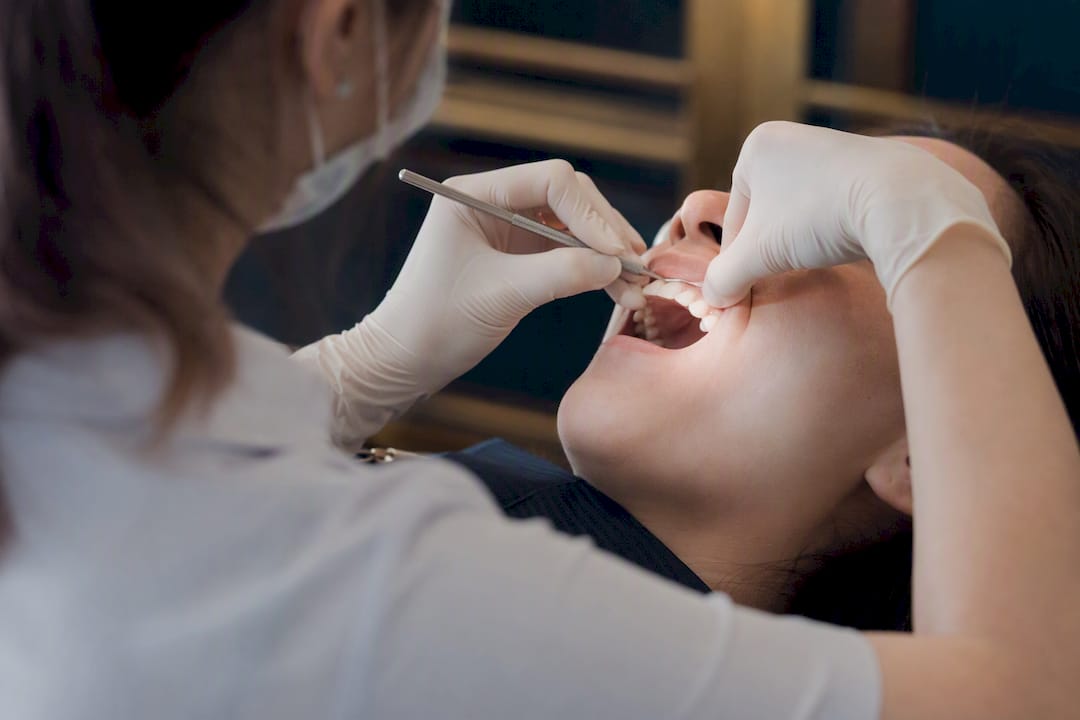
If the gap has appeared simply because crowding has resolved and your gums are otherwise healthy, a dentist or your orthodontist is the right first call. If recession or bone loss is suspected, ask for a periodontist referral first.
Take these questions to the consultation:
- Is this an orthodontic issue, a periodontal one, or both?
- Would further aligner refinement close the gap, or do I need bonding or veneers?
- Is my gum health stable enough for a restorative fix now, and what maintenance will it need?
What our clinic looks for when planning around black triangles
I look at papilla risk from the first scan, not after the aligners have finished moving teeth. Triangular incisors, mandibular crowding, and any early sign of recession all get flagged before a digital plan is finalised, because that is the point where IPR and contact-point control can still change the outcome.
In practice, that often means combining a digital Invisalign plan with a planned round of refinement, then finishing with composite bonding where a small embrasure remains, or same-day hybrid veneers where the patient wants a broader change. Every case is different, and the right combination depends on what the gums and bone are doing underneath.
— Tashfeen
Getting your black triangles assessed and treated in Glasgow
If you have noticed a gap opening up between your teeth during or after Invisalign, TJ Smile Studio can tell you fairly quickly whether it needs prevention through further aligner refinement, a restorative fix, or a periodontal review.
A consultation typically starts with a digital scan and a close look at your gumline, not just your bite, so we can see exactly where each contact point sits and how much papilla is present. From there, patients still mid-treatment often benefit from refinement aligners and IPR planning to intercept the gap before it fully opens. Patients who have already finished treatment usually move straight to composite bonding for smaller gaps, or porcelain veneers when several teeth need reshaping as part of a wider digital smile makeover. Book a consultation to find out which route fits your teeth and gums.
Sources
Recommended
This article is general information, not personal dental advice. What's right for your teeth depends on a clinical examination — the condition of your enamel, gums, bite and any existing dental work — and no article can assess that. Outcomes vary between patients, and all treatment at TJ Smile Studio is subject to assessment and clinical suitability.
Clinically reviewed by Dr Tashfeen Jamil BDS, MFDS RCS Ed, AssocFCGDent, PGDip Restorative and Aesthetic Dentistry — GDC registration 286427, Principal Dentist at TJ Smile Studio, 1 Spiersbridge Way, Thornliebank, Glasgow G46 8NG.
If you have dental pain, swelling or an injury, call the practice on 07728 808510. Out of hours in Scotland, call NHS 24 on 111.